Scroll to explore
13.80 Gyr
COSMIC EPOCH
Since Big Bang Origin
2.0+ Trillion
GALAXIES
Observable Laniakea Field
93.0 Billion LY
COMOVING HORIZON
Particle Horizon Sphere
< 0.0001%
EXPLORED REALM
Frontier Horizon Boundary
Curiosity
The relentless impulse to venture into the unknown.
Observation
Multi-spectral arrays peering across 13 billion years.
Frontier
Permanent planetary bases on the Moon and Mars.
SOL SYSTEM
L2 Orbit
Earth-Moon Barycenter
384,400 km orbital radius
PRIMARY CELESTIAL TARGET • SOL III
TERRESTRIAL • HABITABLE ZONE
The cradle of life, oceans, and nitrogen-oxygen atmosphere.
The only known astronomical object harboring conscious life, Earth boasts liquid surface water, an active protective magnetosphere, and dynamic tectonic renewal.
DISTANCE FROM SUN
149.6M km (1.0 AU)
DIAMETER
12,742 km
ORBITAL PERIOD
365.25 Days
GRAVITY & MOONS
9.81 m/s² • 1 Moon
Mercury
0.387 AU • 88 Days
Sun-scorched iron-core world with extreme thermal swings.
Venus
0.723 AU • 465°C
Runaway greenhouse furnace veiled in sulfuric acid clouds.
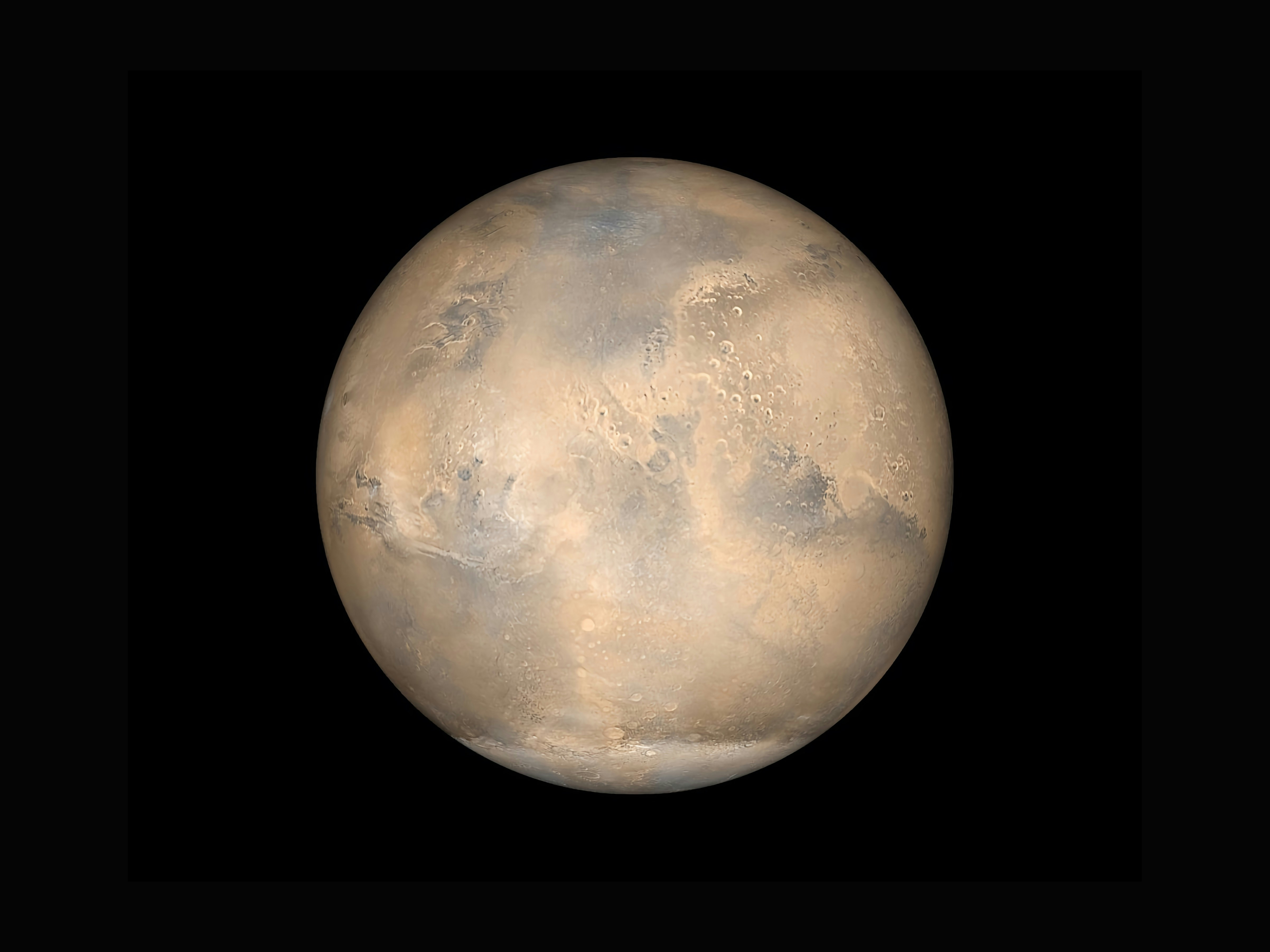
Mars
1.524 AU • 687 Days
Rust-red desert world home to massive shield volcanoes.
Jupiter
5.204 AU • 95 Moons
Colossal gas giant with Great Red Spot storm vortex.
DEEP SPACE OBSERVATORY

NGC 3324 • CARINA (THE KEEL)
7,500 Light-Years
Cosmic Cliffs of Carina
Captured by Webb’s near-infrared camera, dramatic gaseous peaks reach up to 7 light-years in height where nascent protostars emerge from gravitational collapse.

MESSIER 16 • 6,500 LY
Pillars of Creation
Towering columns of cold interstellar hydrogen gas and microscopic dust glowing under ultraviolet stellar winds.

MESSIER 31 • 2.537M LY
Andromeda Spiral
Spanning 220,000 light-years across with one trillion stars, destined to merge with the Milky Way.

MESSIER 57 • 2,570 LY
Ring Nebula (M57)
Concentric shells of ionized gas expelled into space by an aging white dwarf star in Lyra.

SMACS 0723 • 4.6B LY LENS
Webb’s First Deep Field
Thousands of distant early galaxies magnified through the immense gravitational lensing distortion of SMACS 0723.
Interactive multi-body gravitational physics simulation rendering Keplerian trajectories and planetary velocities across relativistic spacetime.
EXPLORATION FLEETS
Telemetry and flight logs of interplanetary probes, space observatories, and lunar architectures.
INTERSTELLAR
1977 — Present
Voyager 1 & 2
NASA / JPL • 24.3 Billion km • Interstellar Space (Oort Cloud)
Carrying the Golden Record, Voyager 1 is the most distant human-made artifact. Having crossed the heliopause into interstellar space in 2012, it continues measuring cosmic plasma and radiation outside the solar wind bubble.

ACTIVE
2021 — Present
James Webb Space Telescope
NASA / ESA / CSA • 1.5M km • Sun-Earth L2 Lagrange Point
Operating at 7 Kelvin with an unfolded 6.5-meter gold-plated beryllium mirror, JWST peers through cosmic dust clouds to image the earliest luminous stars and galaxies formed after the Big Bang.

EN ROUTE
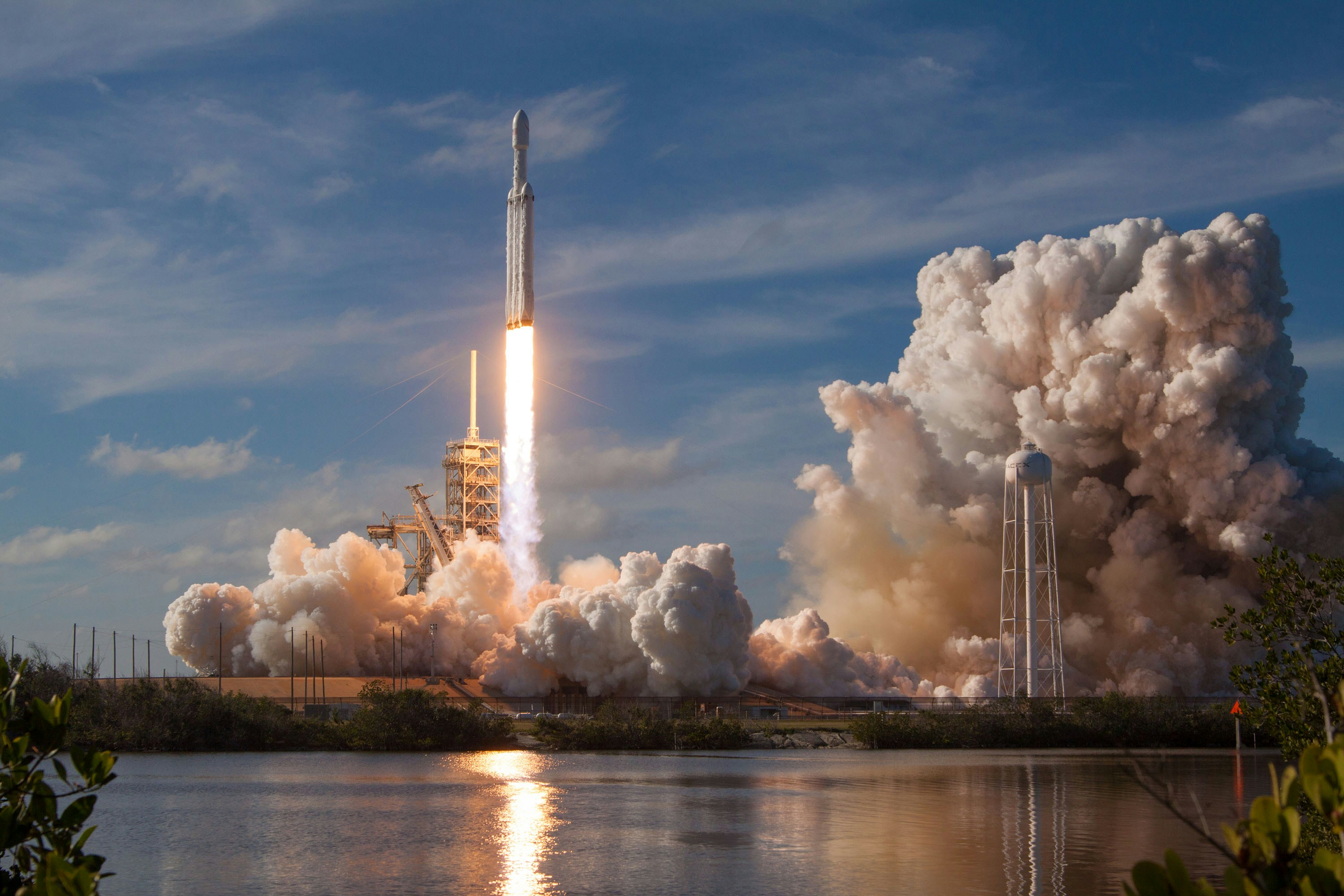
2022 — Present
Artemis Lunar Program
NASA & Partners • Lunar Orbit & South Pole • Shackleton Crater
The successor to Apollo establishing sustainable human presence on the lunar South Pole. Utilizing SLS and Orion spacecraft, Artemis tests deep-space habitat technologies required for expeditions to Mars.
ACTIVE
2020 — Present
Mars 2020: Perseverance
NASA / JPL • 225M km • Jezero Crater Delta, Mars
Searching for biosignatures of ancient microbial life in a 3.8-billion-year-old river delta. Perseverance has hermetically sealed dozens of rock core samples slated for return to Earth via Mars Sample Return.
FUNDAMENTAL CONSTANTS
Invariable physical constants and astronomical horizons of the observable universe.
TAU_0 = 13.787 ± 0.020 GYR
Cosmic Horizon Age
Elapsed cosmic time since the Big Bang singularity, determined via Cosmic Microwave Background radiation.
CATALOG: NASA EXOPLANET ARCHIVE
Confirmed Exoplanets
Alien planetary systems cataloged by Kepler, TESS, and ground observatories across our stellar neighborhood.
DIAMETER: 28.5 GPC / 93 GLY
Observable Cosmos
Comoving spatial diameter of the observable spherical volume centered upon our terrestrial vantage point.
ESTIMATE: HUBBLE ULTRA DEEP FIELD
Galactic Systems
Estimated bound galactic structures in the cosmic web, each housing between 100M and 100T stars.
EXACT: 299,792,458 M/S
Speed of Light (c)
Universal invariant cosmic speed limit of massless particles and electromagnetic radiation in vacuum.
LAMBDA-CDM CONCORDANCE MODEL
Dark Matter & Energy
The invisible constituent comprising the overwhelming mass-energy density of the universe.
Precision optical inspection spread across the Andromeda galactic core.

LOUPE MAGNIFIER: 2.8X RESOLUTION
OCTOBER 2026 OBSERVATION
A multi-exposure composite spanning 200 hours of imaging. Faint outer tidal streams reveal remnants of cannibalized dwarf galaxies engulfed by Andromeda across its 10-billion-year evolutionary history.
TELESCOPE
Subaru 8.2m HSC
WAVELENGTH
450–700 nm Optical
TOTAL STARS
~1,000,000,000,000

